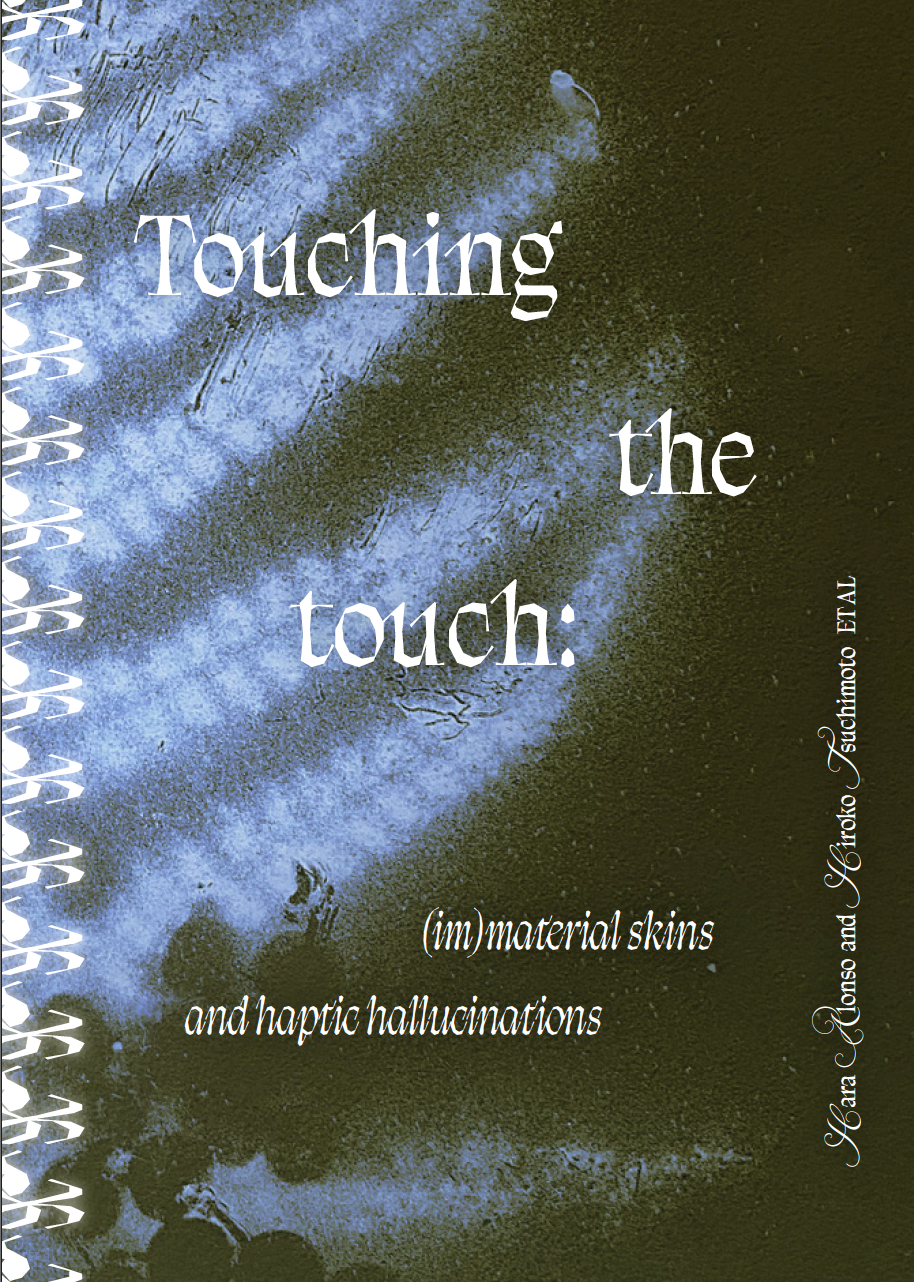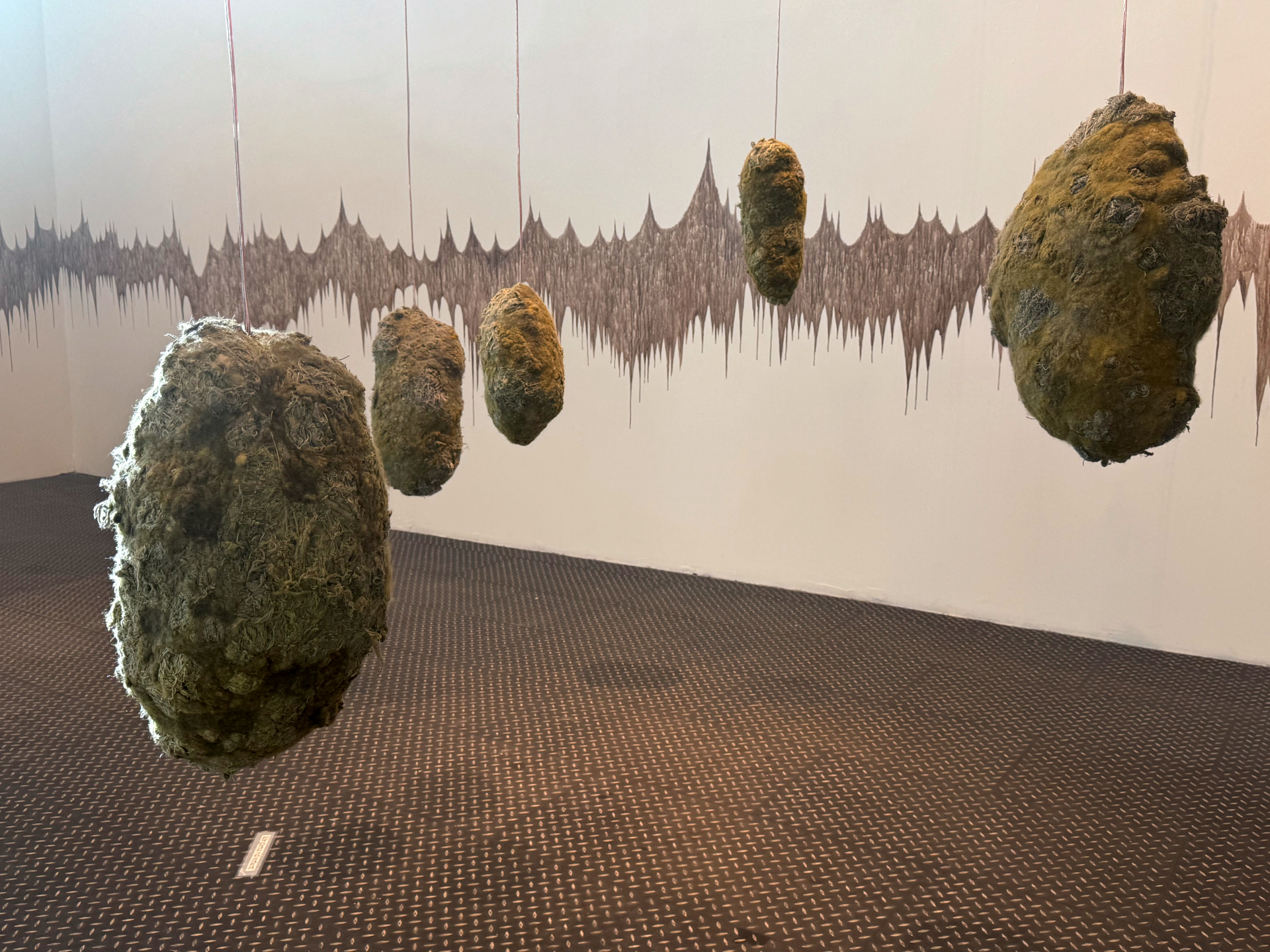
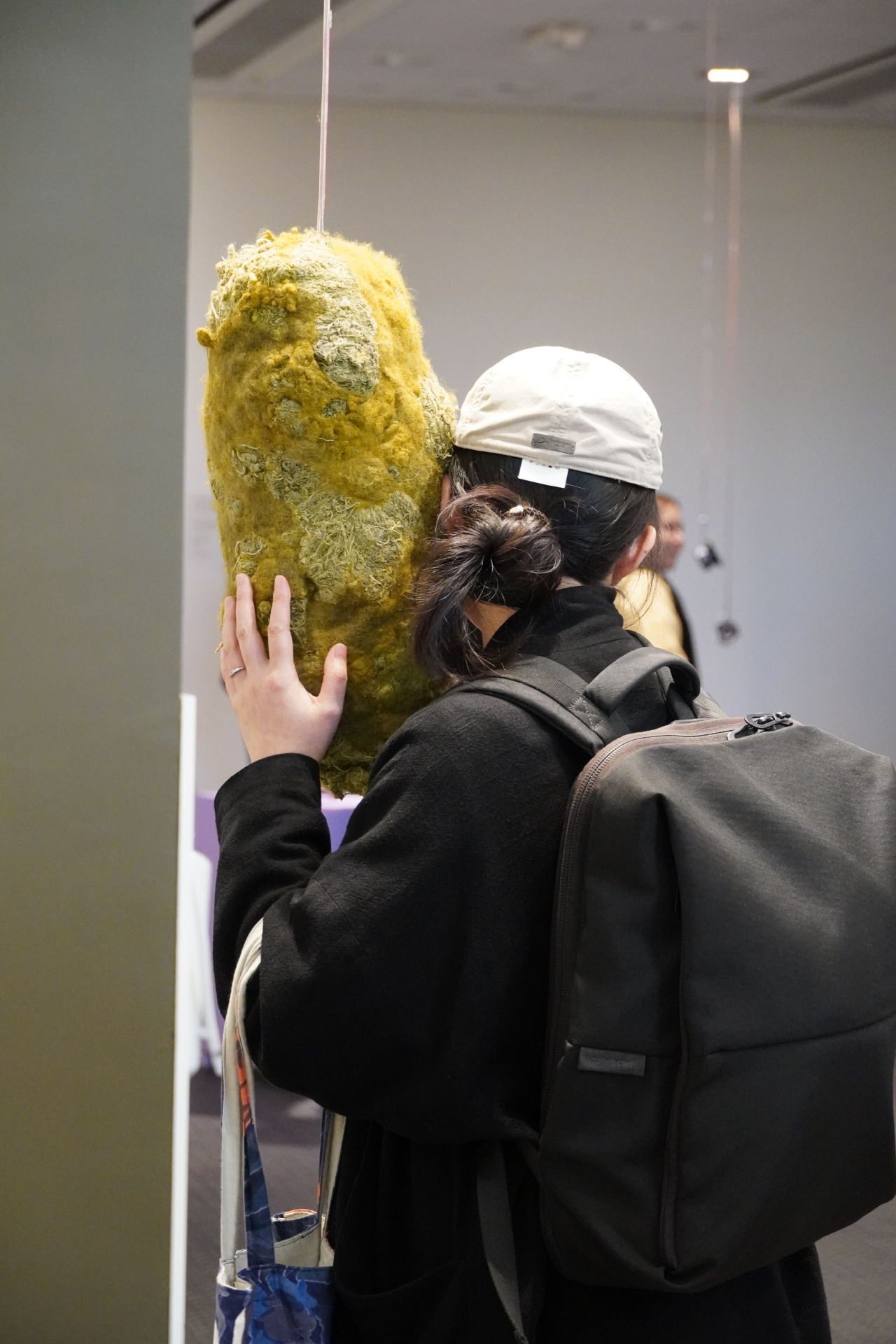
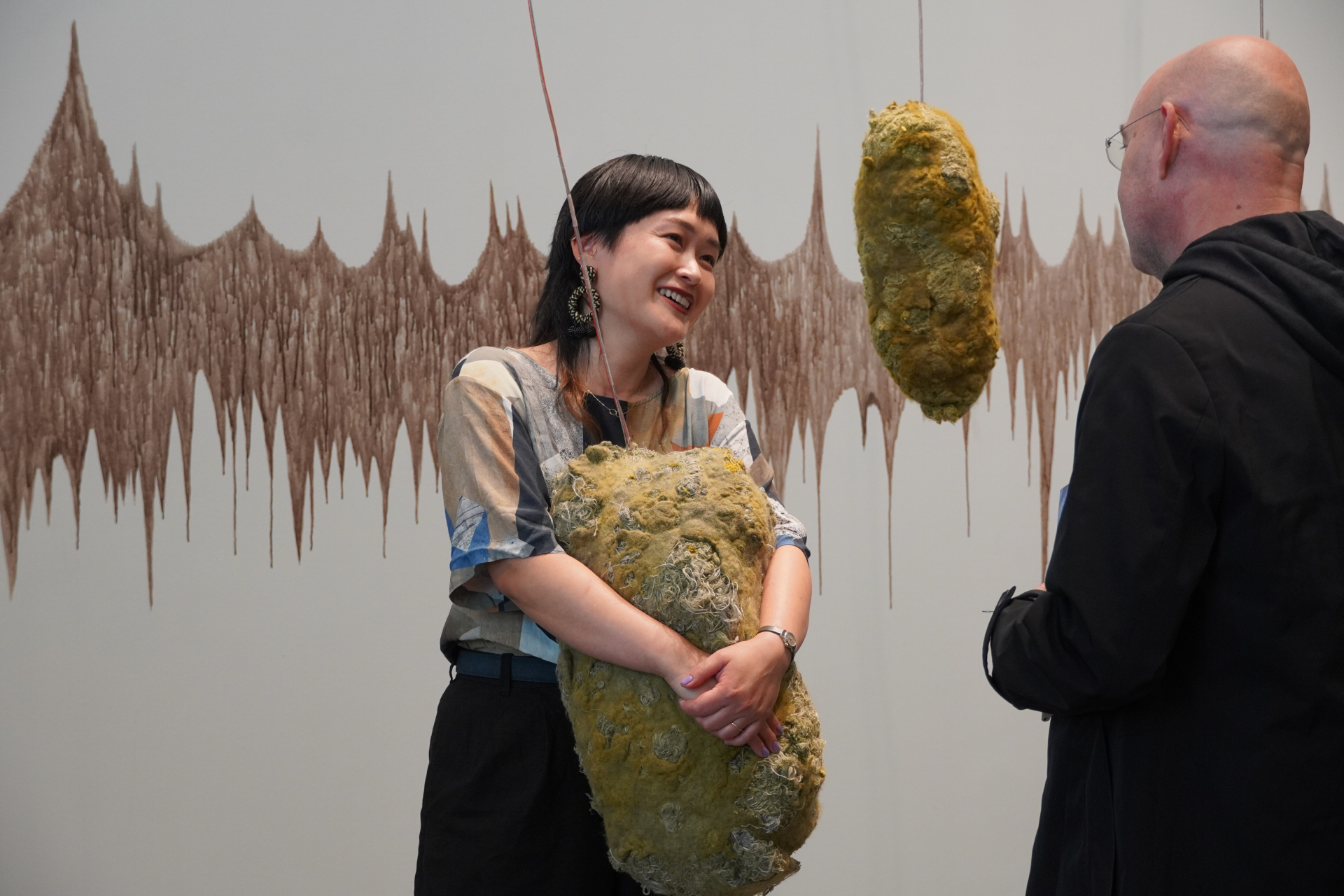
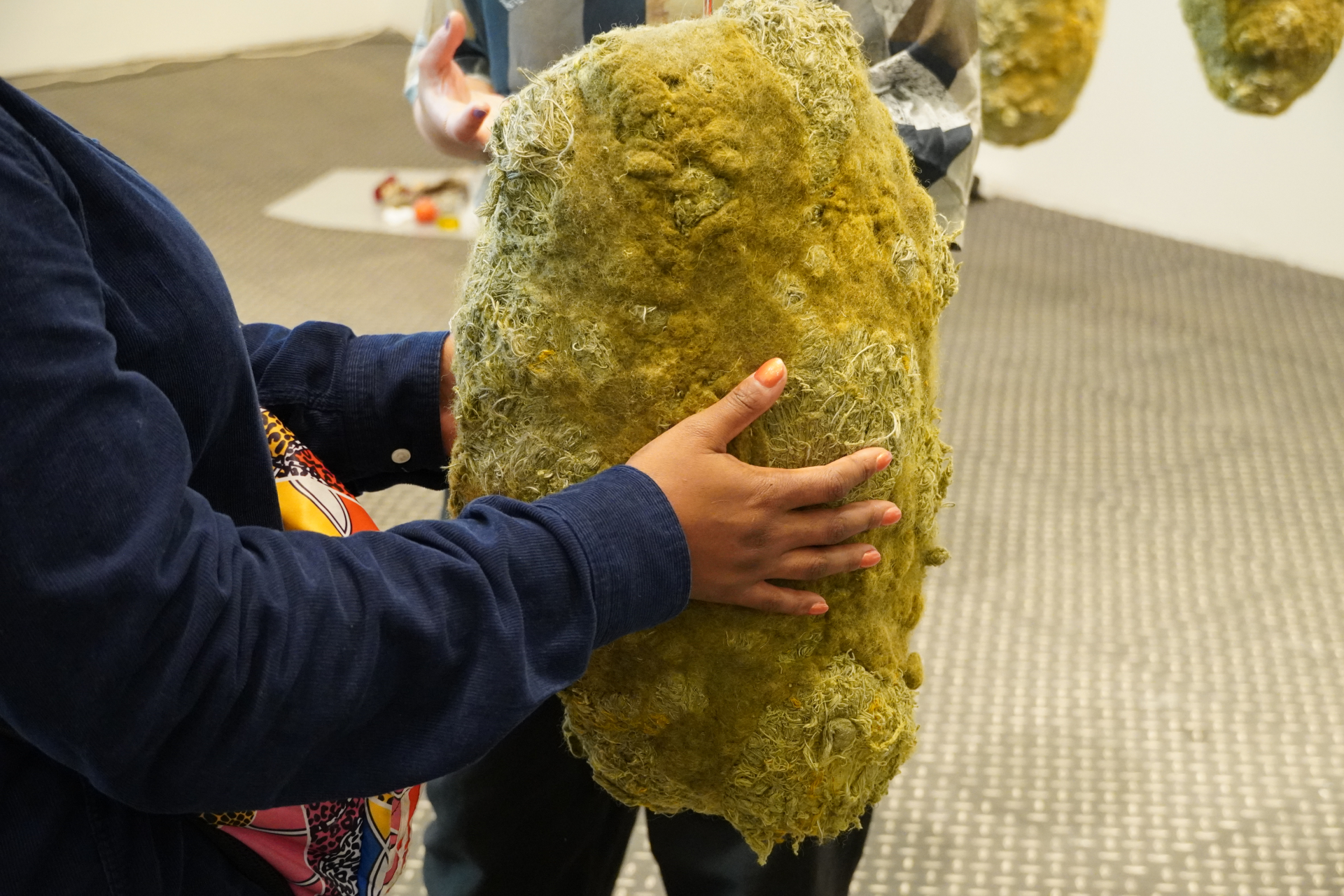
Vibrating sound and textile installation, in collaboration with Hara Alonso at the exhibition NÄR HUDEN LYSSNAR: (IM)MATERIELLA SKINN OCH HÖRBAR BERÖRING at SKHLM konsthall, Stockholm (September – October 2025)
Material: wool, cotton slub, cotton gauze, colored with turmeric and sumi ink
Photo: Folk i Skärholmen & Hara Alonso
'touching the touch: (im)material skins and haptic hallucinations' is an artistic exploration centred on touch as a form of listening and the interplay between sensation and matter. Through tactile materials such as textiles and vibrating soundscapes, the exhibition unfolds multiple sensory modalities: the haptic vision, the flesh touch and the tactile ear. How do materials reveal their memories and stories? This exploration delves into touch as a primary sense of nearness, intimacy and reciprocity, to cultivate a greater sensibility to the vibrational essence of the world.
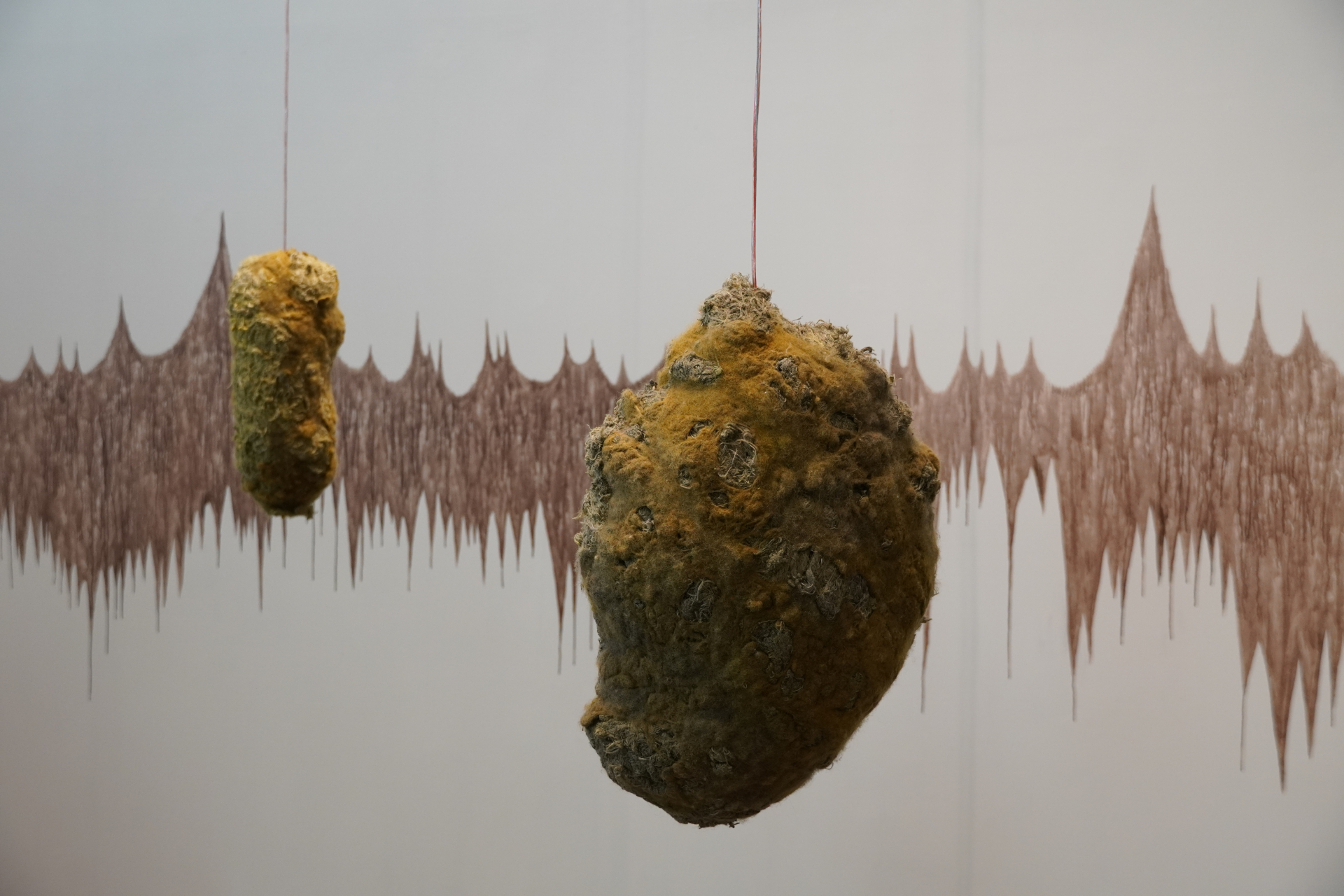
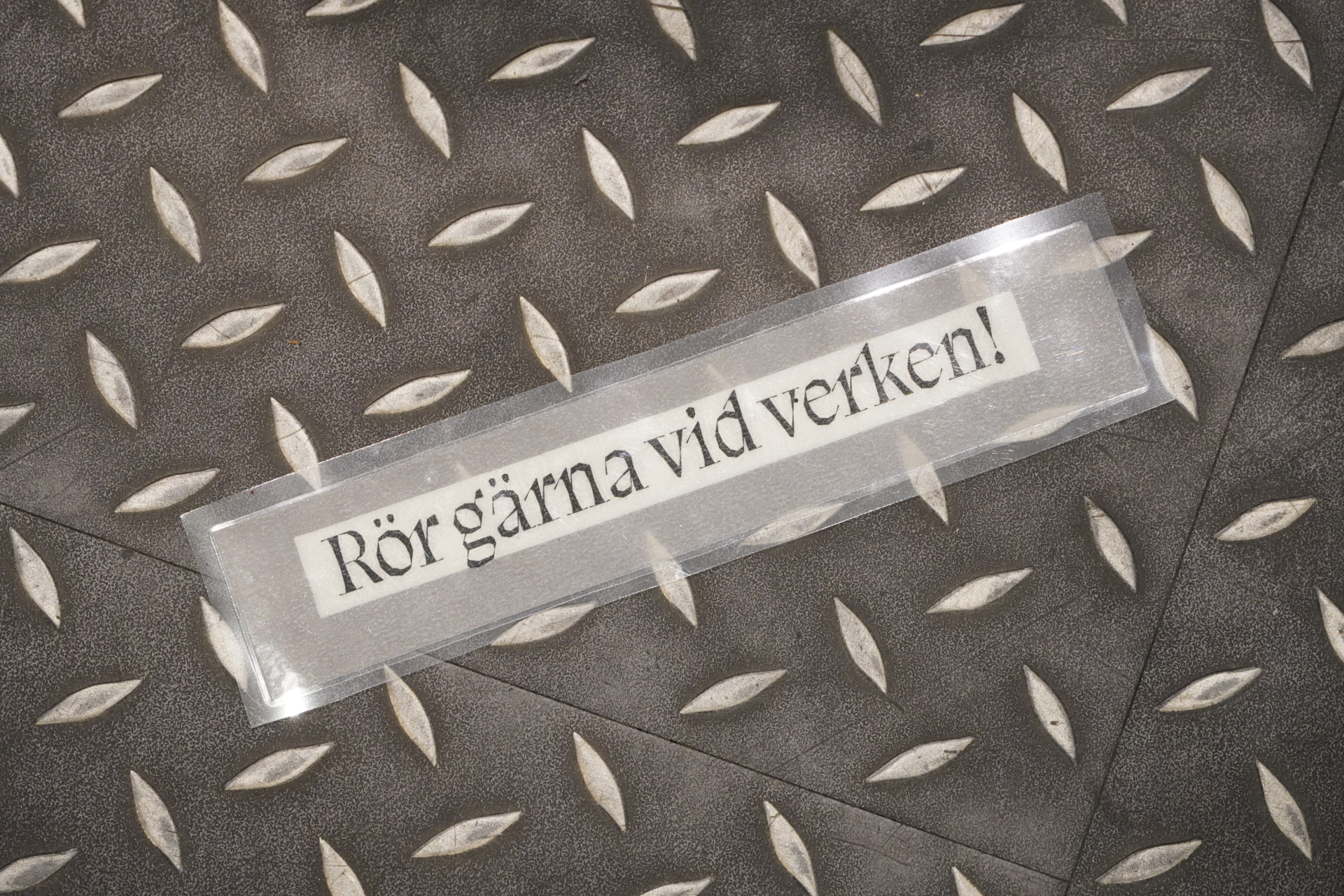
The conversation excerpt between Tsuchimoto and Alonso from an art publication: TOUCHING THE TOUCH: (IM)MATERIAL SKINS AND HAPTIC HALLUCINATIONS, designed by Sissela Blanco
:: agency ::
HT: The friction between my controlling nature and the agency of materials is a constant in my practice. I'm drawn to the moment when I let go, when control slips away, and the material takes the lead. These moments are often the most surprising and meaningful. Through such encounters, I've come to understand the nonhuman world differently. For example, when I make ink from alder cones or remove dirt from wool with tweezers, the colors, textures, and smells begin to speak, telling stories of their environments, histories, and transformations. In these processes, the materials don't simply serve my intentions; they guide, resist, and reshape them.
HA: I feel something similar with sound and the body: The ears and the skin are non-linear devices. This means that when they receive physical vibration and transduce it into electrical impulses, they get distorted along the way. This route is a convoluted process and completely subjective. I like to think of these as filtering processes. The perception gets transformed then into something else, and this something else into something else, that turns out to be sound. I find it interesting to embrace the distortion that can happen between a proposed score and the result, and how the instrument and the room affect it. Of course, I'm very interested in how the room/space becomes a variable with its own resonances, textures, and reflections, but also how the instrument, as a sort of prosthesis of the musician, becomes a responsive device. The saxophonist Evan Parker talks about biofeedback, a way to listen to how your body interacts with your instrument, and how, by letting it be, it can teach you new techniques. In a way, it's like giving agency to your instrument and your body to act on their own, to surrender the mind. In a way, this way of composing proposes a certain elasticity and sinuosity, to be attentive to what is already there.
HT: That's such a fascinating perspective. For this project, I've worked with materials that play intimate and varied roles in everyday life: gauze for treating injuries, cotton slub for cleaning, and wool for warmth. These are not passive materials. They carry emotional, sensory, and cultural weight. Gauze evokes care and vulnerability; cotton slub carries traces of industrial labor and repetitive gestures; wool recalls comfort, protection, and the life of the animal it came from. Rather than leading or using, I often find myself following, listening, adjusting, and entering into a kind of dialogue with the materials. This approach is deeply informed by Tim Ingold's idea of making as a practice of "correspondence", where the maker does not impose form onto matter, but responds to the flows and forces of materials in a process of mutual becoming. Attention and responsiveness replace authorship.